About Hartz AI
Ministerial visits to Hartz AI
We rent a managed office on the middle floor of the Wohl Enterprise Hub in Finchley. Over two years, four Work and Pensions frontbenchers have come through the building, from two governments and both main parties, and each time we have been one of the businesses they were brought in to meet.
We are a small business ourselves, working through the same changes as everyone else in the building, so the conversations tended to be practical ones.
Why the visits happened
Every one of these visits started with Work Avenue, the employment and business support charity that runs the Wohl Enterprise Hub and helps people into work, into training and into starting something of their own. Ministers with a Work and Pensions brief come to see that work because it is close to the problem their department is trying to solve.
We are a commercial tenant in the building and Work Avenue's AI training provider, which is why we are on the itinerary rather than a door someone happens to pass. Ministers want to know what AI is doing to jobs, and Work Avenue points them at the business that spends its week answering that question.
Who has visited
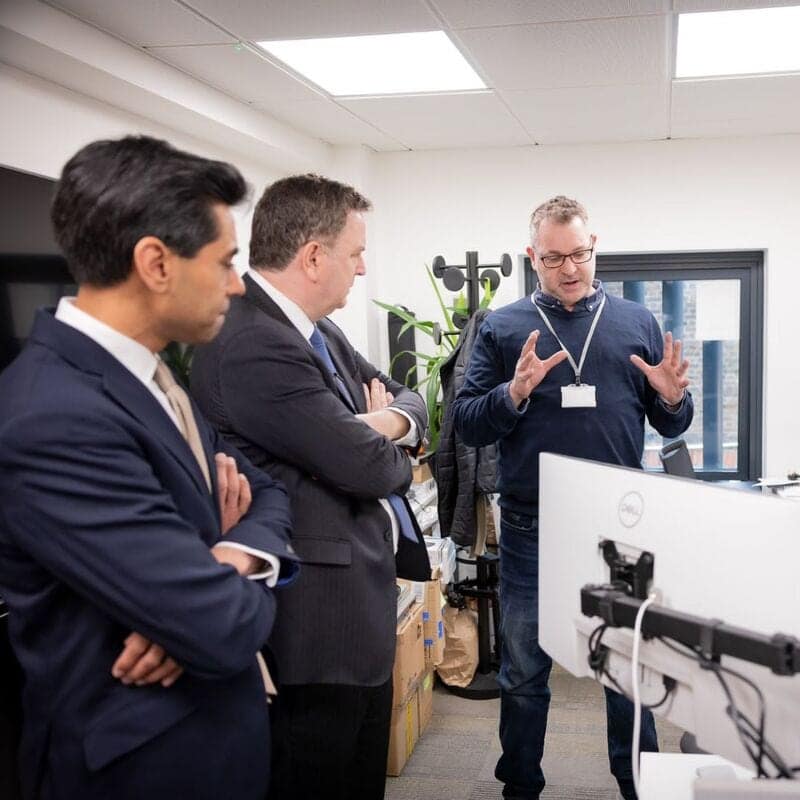
Mel Stride MP, then Secretary of State for Work and Pensions, in February 2024, with Ameet Jogia MBE, then Conservative parliamentary candidate for Hendon. He asked the question everyone asks: does AI mean doom and gloom for the job market? We said the change is real and gave him the evidence from a previous business of ours, an e-commerce company where the freelance graphic design and copywriting work simply stopped being commissioned once Midjourney and the early copywriting tools arrived. Nobody was made redundant. We just stopped needing to send the work out. The useful part is what comes next, because somebody still has to interpret the output, run the systems and make the decisions, and that person needs training before the change arrives rather than after it.
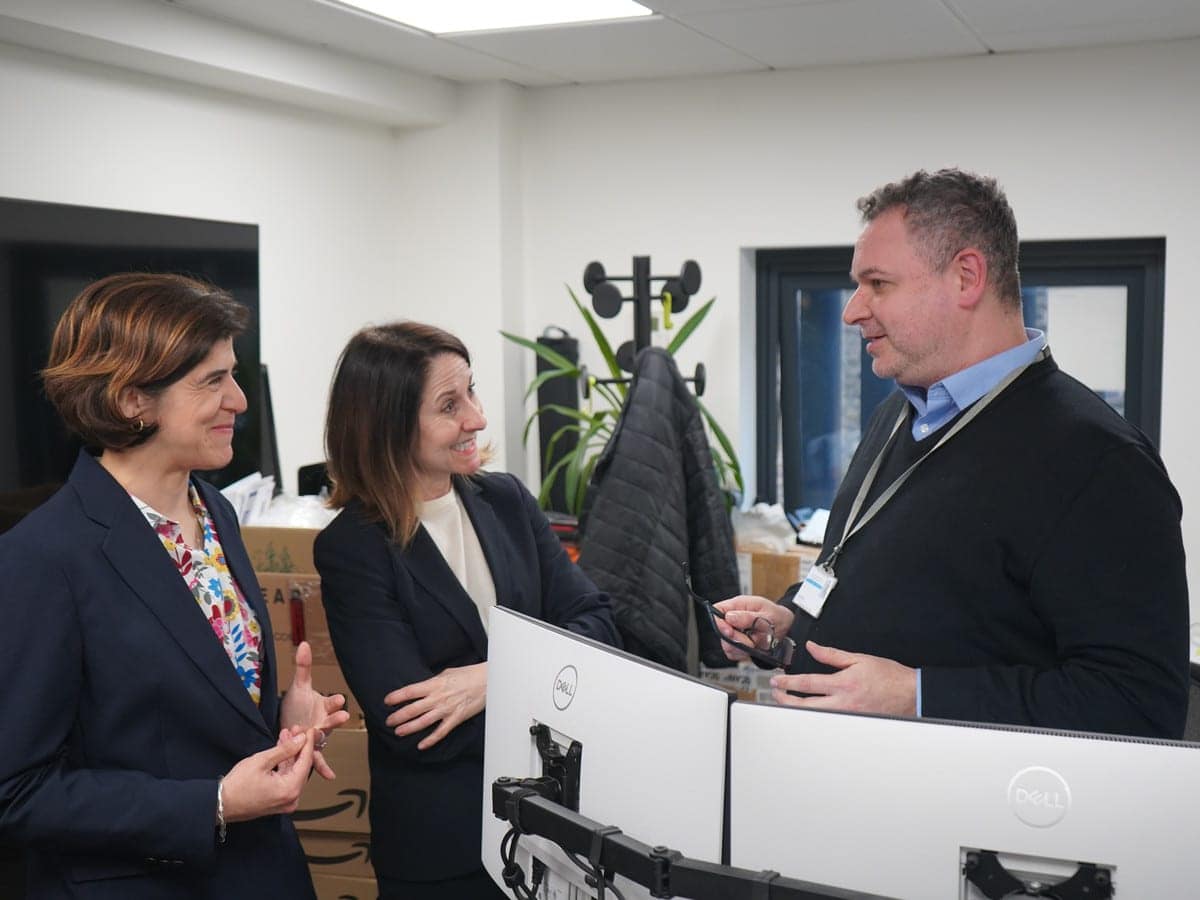
Liz Kendall MP, then Shadow Secretary of State for Work and Pensions, a fortnight after Stride, with Sarah Sackman, then Labour parliamentary candidate for Finchley and Golders Green. We put the case for AI training in jobcentres directly to the woman who, five months later, was running them. Kendall became Secretary of State for Science, Innovation and Technology in September 2025, heading the Department for Science, Innovation and Technology, which owns UK AI policy. Sackman won the seat that July and remains our local MP, serving as Solicitor General before her current role as Minister of State for Courts and Legal Services.
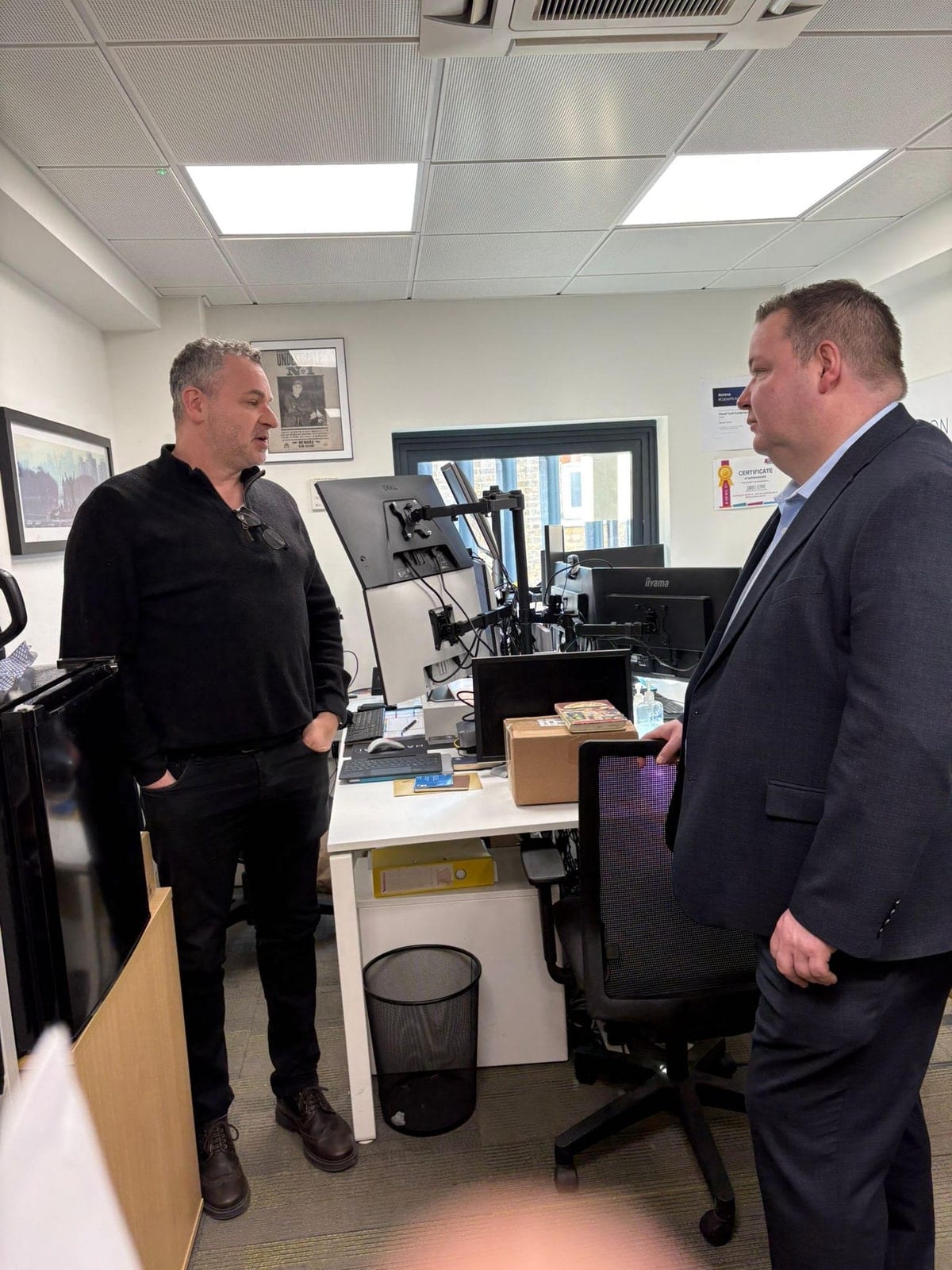
Pat McFadden MP, Secretary of State for Work and Pensions, on 13 January 2026. He came through the Hub to meet the businesses working there and we were one of them. His brief covers the Department for Work and Pensions, which runs jobcentres and the working-age benefits system, and since September 2025 it has also covered apprenticeships and adult skills.
Andrew Western MP, then Parliamentary Under-Secretary of State for Transformation at the Department for Work and Pensions, holding the digital, AI and service modernisation brief, on 28 April 2026. That conversation went somewhere more personal than the others. We ended up talking about what any of this means for a child choosing a career, and whether the sensible advice now is to learn a trade. The problem with that advice is that everyone can see it coming, and a country that pushes a generation into the trades ends up with more plumbers than it needs and wages falling to match. From there we got on to what happens to income tax receipts when firms grow revenue without growing headcount. Neither of us had an answer. It is the right conversation for the department to be having.
What we tell them
All four asked a version of the same question: where does AI take jobs, and how do you prepare people for it. Our answer has not changed between governments.
Picture two candidates for the same job. Same experience, same references, same interview. One of them understands how to work with AI and is curious about it, and the other has never touched it. That job goes to the first candidate, and it is not close. Which means anyone without those skills slides down the pecking order on every application, even when nothing else about them is weaker. In some cases the curiosity outweighs a real gap elsewhere in the application.
That is the argument we made to Liz Kendall for putting AI training into jobcentres. She said the department should have someone doing our sort of work on the taskforce looking at jobcentres. Nothing followed from that, and we mention it because it was said, not because it led anywhere.
The obvious objection is that people who have been out of work for a long time have bigger problems than prompt engineering, and that is fair. Basic computer literacy comes first and we say so in our own training, where we ask people to arrive able to copy, paste and open a new tab. What has changed is where that bar sits. Typing quickly is no longer part of it, because AI transcribes speech accurately in real time, and for people with dyslexia or other forms of neurodivergence that has removed a barrier that had nothing to do with their ability to do the job.
Cross-party, and in every case about the practical end of it rather than the design of policy. That is the only part we claim to know about. Government has since put the same emphasis on adoption and skills in its AI Opportunities Action Plan, published in January 2025.
If there is one thing we would say to the department, it is that the people worth asking are the ones in the trenches: the small businesses actually doing this, and the charities and employment services trying to get people into work while the ground moves.
Common questions about ministerial visits
- Which government ministers have visited Hartz AI?
- Four Work and Pensions frontbenchers have visited Hartz AI at the Wohl Enterprise Hub in Finchley: Mel Stride MP in February 2024, Liz Kendall MP a fortnight later, Pat McFadden MP on 13 January 2026 and Andrew Western MP on 28 April 2026. Ameet Jogia MBE and Sarah Sackman joined the first two visits as parliamentary candidates.
- Why do ministers visit Hartz AI?
- Ministers come to the Wohl Enterprise Hub in Finchley to see the work of Work Avenue, the employment and business support charity that runs it. Hartz AI rents a managed office in the Hub and delivers Work Avenue's AI training, so we are one of the businesses they meet while they are there.
- What does Hartz AI tell ministers about AI and jobs?
- That the change is real and already visible in small businesses, and that the useful question is what people need to learn before it reaches them. Where two candidates are otherwise equal, the one who can work with AI gets the job, which is why we argue for AI training in jobcentres alongside basic digital skills.
- Does a ministerial visit mean Hartz AI works for the government?
- No. These were visits to a small business, not contracts. Hartz AI is an independent AI training and consultancy firm working with UK SMEs and charities, the visits have been cross-party, and no commercial or advisory relationship with any government department follows from one.
With thanks to Work Avenue, who do the work that brings ministers to Finchley in the first place.
If you want the same conversation for your own team rather than a photograph of it, talk to us about AI training for your business.